MB-303SoftwareLive2026
Tensor3D Storefront
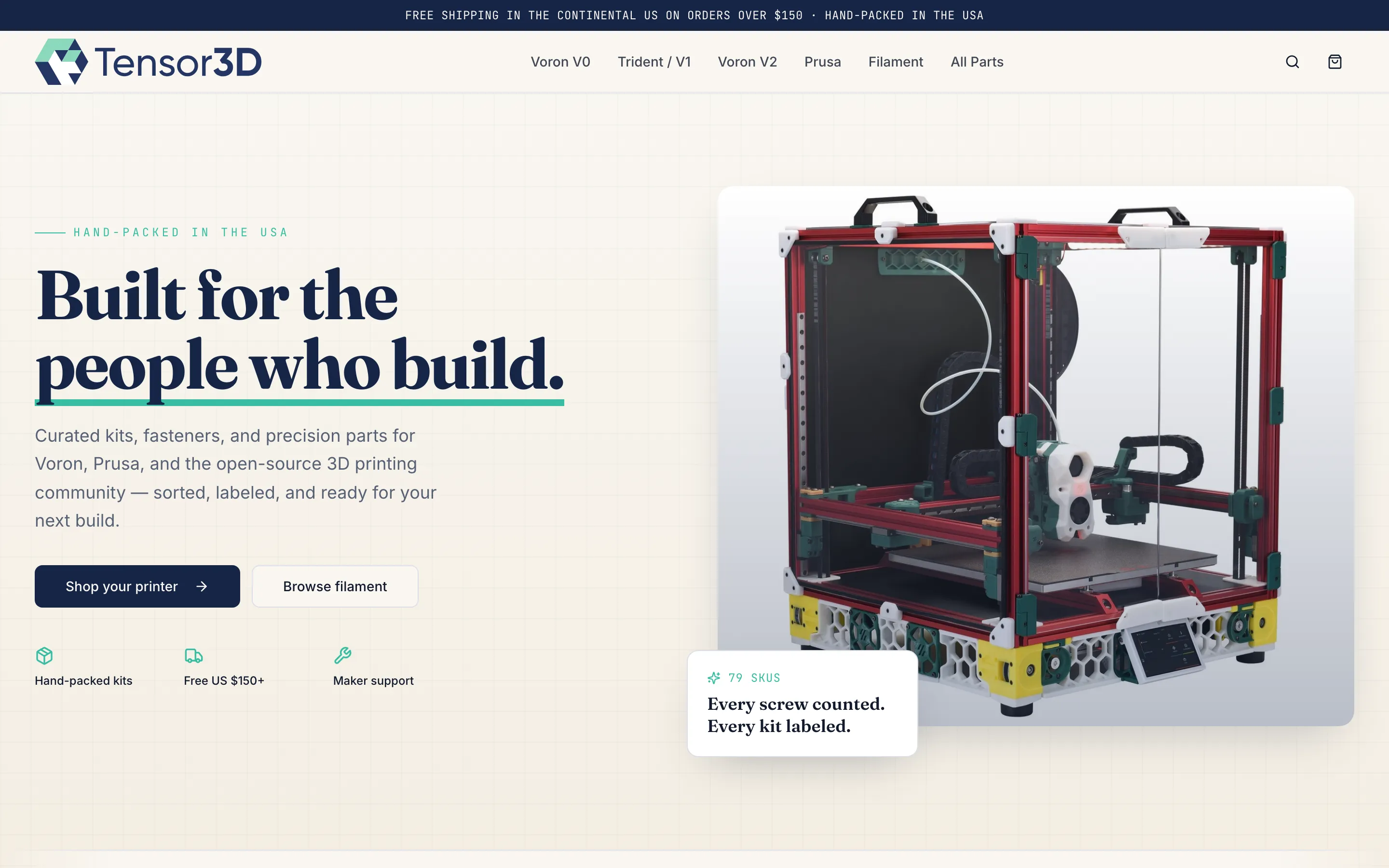
A self-hosted e-commerce platform that replaced Shopify for my 3D-printer parts shop. It covers storefront, checkout, oversell protection, shipping labels, admin and analytics, and I migrated in four years of order history.
The rule for this build: this is not a Shopify clone. Where a purpose-built approach fits a small parts shop better than Shopify’s conventions, take it.
What it does
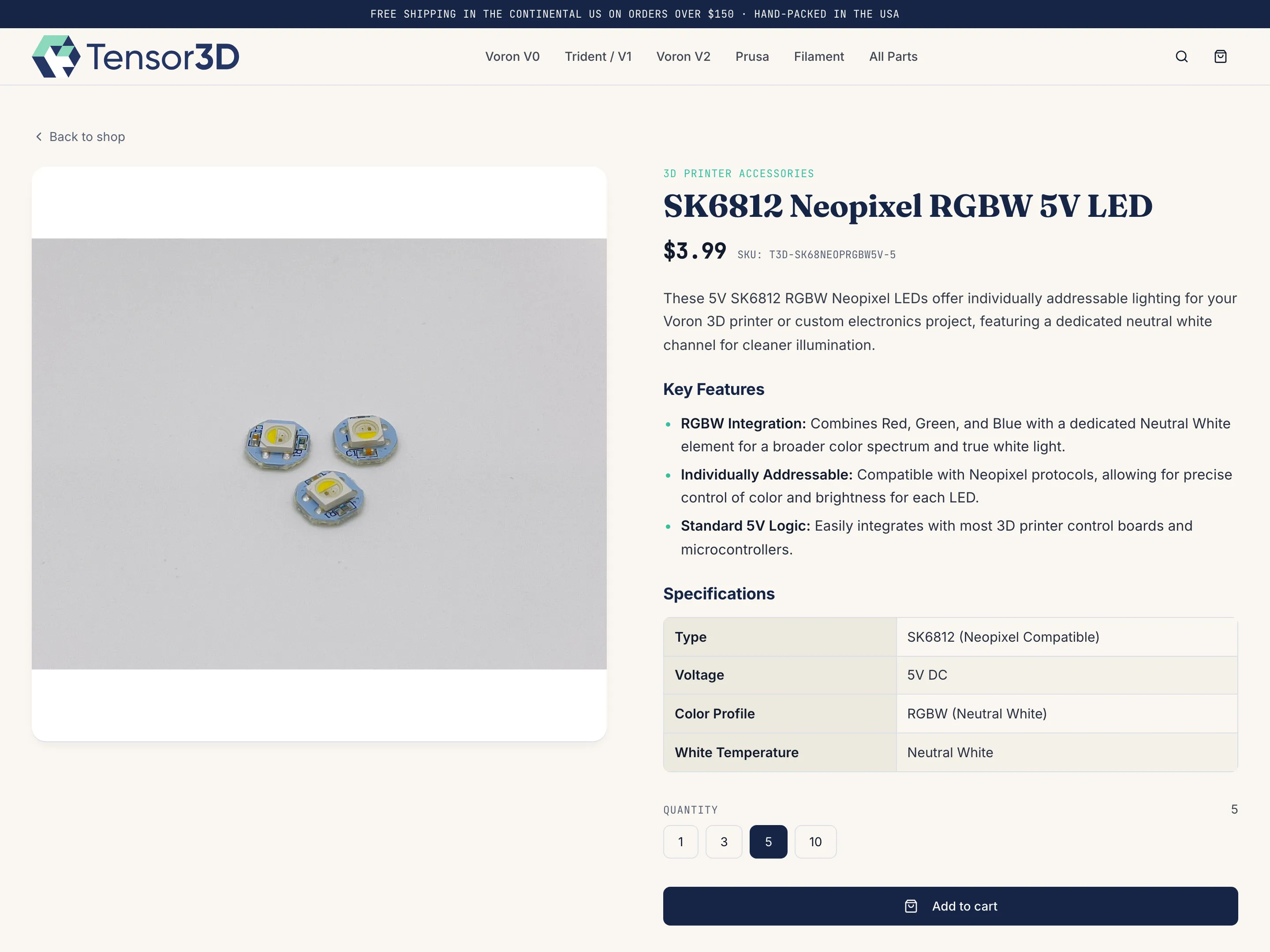
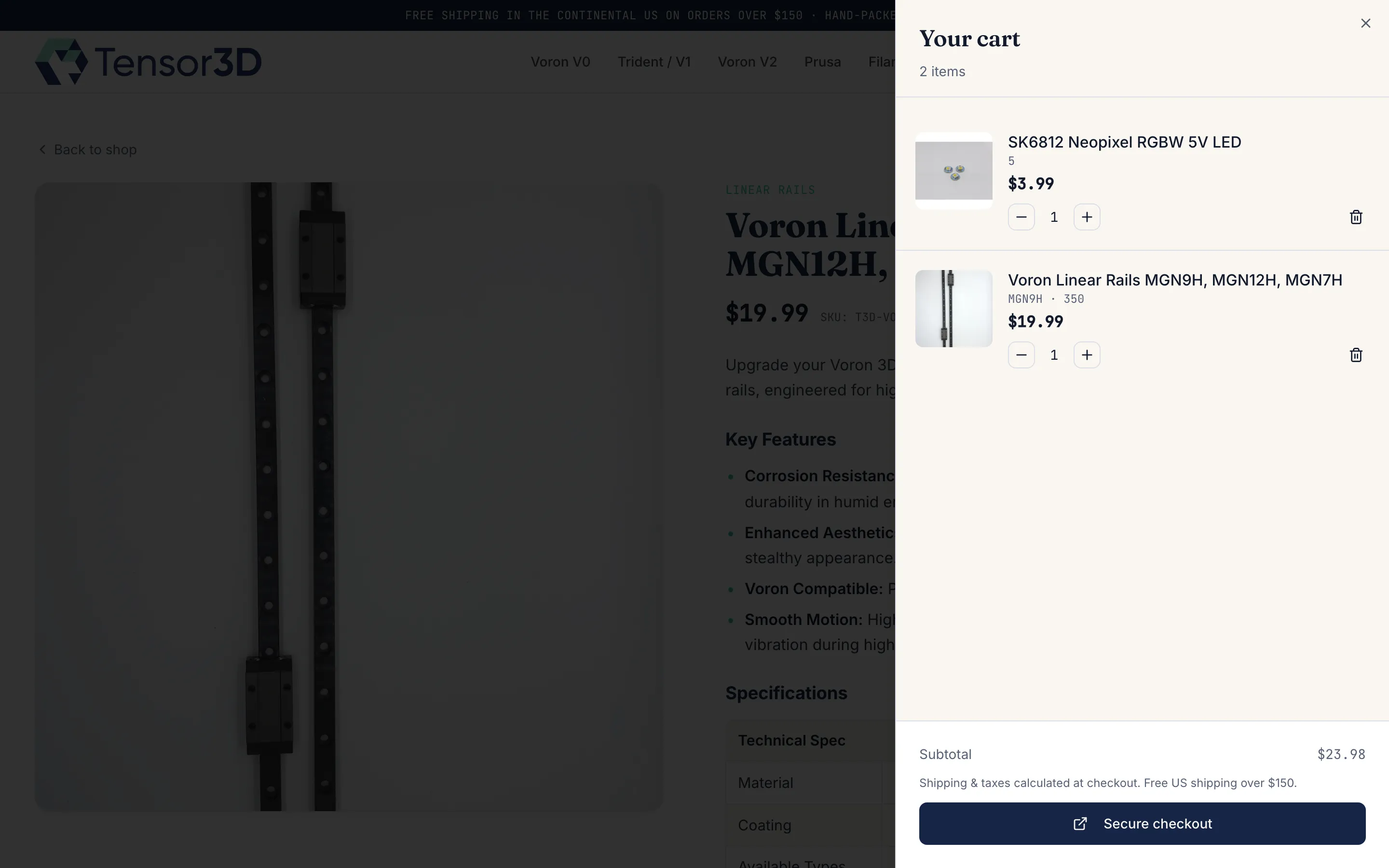
- Storefront: faceted listing, fuzzy search, variant picker, structured data, a slide-out cart and a sitemap.
- Checkout through Stripe with live carrier rates, optional tax, and discount codes with limits, dates and collection scoping.
- Oversell protection: stock is held when checkout starts, consumed when payment lands, and released when the session expires. The Stripe session expires at 30 minutes and the hold at 45, so a payment can never land after its hold is gone.
- Admin: inventory with 30-day sales velocity, days of stock left and margin; a ship queue with a combined pick list; label purchase; refunds; roles; and an audit log.
- Migration: catalog and order history imported from Shopify, safe to re-run, with original dates and order numbers kept.
Security as a design input
- Admin exists on one host only. Requests for
/adminget a 404 unless they arrive on an allow-listed LAN host, before authentication even runs. Then it needs a role, a check in every action, and an audit entry for every change. - Claim the order before spending money. Refunds and label purchases first claim the order row with a conditional update, then call Stripe or Shippo with an idempotency key. That fixed a real double-refund race the audit found.
- Charge the quote the shopper saw. Carrier rates aren’t deterministic, so the quote is stored against the address for 30 minutes and the client never supplies an amount.
- The audit’s critical finding: without a
.dockerignore, the build step copied the live-key environment file into an intermediate image layer. The final image was clean; the layer wasn’t. Easy to miss, and exactly what a line-by-line review is for.